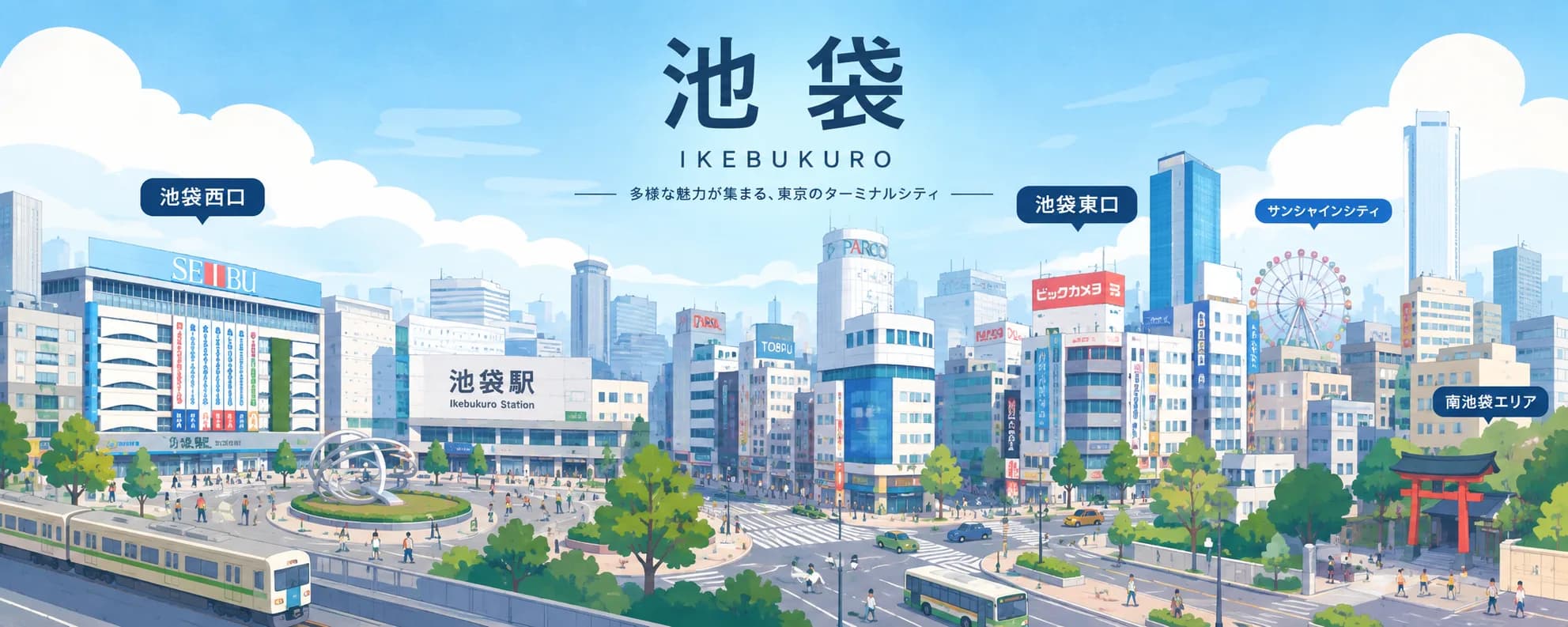
Finding a Men's Relaxation Salon in Ikebukuro: Visitor Checklist
Ikebukuro's East Exit and West Exit have strikingly different characters, and that split shows up in how men's relaxation salons operate there. A guide to the apartment-style West/North Exit district and the concept-driven East Exit area.
What was updated
Published an English guide to the East Exit / West Exit character split in Ikebukuro and how it relates to local salon styles.
What this article covers
Ikebukuro is one of Tokyo's biggest terminal stations, alongside Shinjuku and Shibuya — but its East Exit and West Exit feel like two different neighborhoods. This article covers:
- What the West/North Exit area is like, and the type of salons that tend to open there
- What the East Exit area is like, and the type of salons that tend to open there
- How Ikebukuro's subculture identity shapes salon concepts city-wide
Short answer: the east-west split shows up directly in salon style
In Ikebukuro, this geographic and cultural divide maps almost directly onto how men's relaxation salons operate and who they target. Keeping in mind the contrast between the "hidden, apartment-style West Exit" and the "polished, concept-driven East Exit" makes it easier to find a salon that matches what you're looking for.
This reflects the editorial team's own observations of the neighborhood and local salons, not a formal survey — it won't apply to every business. Always confirm a salon's actual operating style through its own official information.
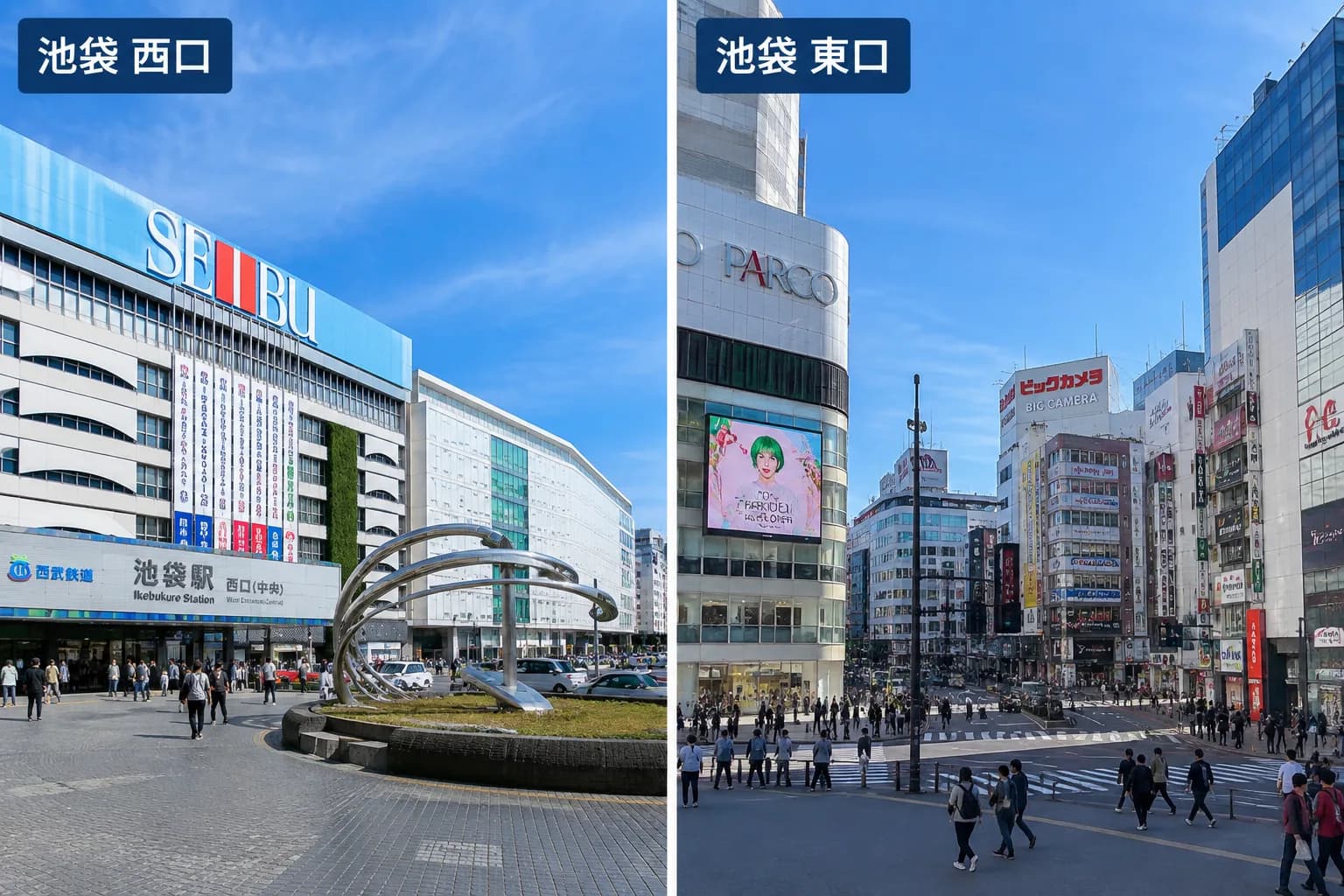
*Even though it's the same Ikebukuro Station, the West Exit and East Exit have a noticeably different atmosphere.*
West / North Exit: a dense entertainment district full of apartment-style salons
The West Exit area — especially around Rosa Kaikan and the North Exit's Heiwa-dori area — is one of Tokyo's densest neon districts, packed with izakaya, adult entertainment venues, a Chinatown, and love hotels.
Property type: mostly one-room apartments
Many buildings here are older apartment blocks and mixed-use buildings, which makes it easy for relaxation businesses to move in. As a result, fully private, apartment-style salons (a single room in a residential building) tend to cluster here at a particularly high density.
Clientele and atmosphere
Clients are often said to be office workers on their way home, or men who drop in after eating or drinking nearby. Salons here tend to emphasize privacy — late-night hours and a low-profile way of visiting discreetly are common selling points.
East Exit: a mix of subculture, shopping, and urban-style salons
Home to Sunshine City and Otome Road, the East Exit is a hub for anime and otaku culture, as well as a busy commercial area lined with department stores and cinemas.
Property type: storefronts and higher-grade buildings
With fewer one-room mixed-use buildings, salons near the station are more likely to be storefront-style spaces inside larger buildings, or located in newer tower or mid-rise apartment buildings toward Higashi-Ikebukuro.
Clientele and concept
This area sees a steady flow of shoppers, office workers, and people heading to or from events. It's known for a wide variety of salon concepts — from higher-end salons that emphasize interior design and cleanliness, to concept salons that lightly incorporate anime or concept-cafe-style atmosphere — reflecting Ikebukuro's identity as a culture-driven neighborhood.
Subculture's openness shapes a wider range of salon concepts
Ikebukuro, epitomized by Otome Road, is a neighborhood where fan culture and pop culture — much of it aimed at women — are deeply rooted.
Because a culture of "pursuing what you personally love" is embedded across the whole area, there's said to be more openness here toward salons that put a therapist's individuality or a specific concept front and center, compared with some other districts.
Therapists and clients who are into anime or games also tend to gather here, which some say creates a different, more approachable dynamic — in terms of conversational distance and shared references — compared with areas like Shinjuku or the Minato area.
What to check before booking
Whichever side of the station you're looking at, the basic checkpoints don't change:
- Correct exit and walking directions/time from the station
- Opening hours and last reception time
- Total cost including course fee, nomination fee, and extension charges
- Whether it's a private apartment-style salon or a storefront salon
- Booking method (phone, web, LINE, etc.)
Don't judge purely by operating style or concept — always confirm pricing and booking details individually. See choosing a salon near a station and how to read reviews for more.
In short: understand the east-west gap, then choose
Men's relaxation in Ikebukuro reflects the neighborhood's own east-west divide: the hidden, apartment-style West Exit versus the polished, concept-driven East Exit.
Neither side is inherently better — narrowing your search based on the atmosphere and experience you're looking for makes it easier to find the right fit.
Frequently asked questions
Is West Exit or East Exit easier for a first-time visitor?
It depends. If privacy matters most, the West/North Exit's apartment-style salons tend to fit; if interior design and cleanliness matter more, East Exit storefront salons are often a better fit. Always confirm details with the specific salon.
Are the East Exit's concept salons offering something unusual?
Not necessarily — it usually just means the interior or service style lightly incorporates anime or subculture elements, not that the treatment itself is different. Check the course details if you're unsure.
Does this article recommend specific salons?
No. This article doesn't list individual, unverified salon names — it's meant to explain the relationship between the neighborhood's character and local salon culture in general.
Related English guides
Read next
Related guides
Finding a Men's Relaxation Salon in Ueno: Visitor Checklist
An English guide to comparing men's relaxation salons around Ueno by opening hours, total price, station access and booking method, including notes for travelers combining a visit with an overnight stay.
Finding a Men's Relaxation Salon in Shinjuku: Visitor Checklist
An English guide to comparing men's relaxation salons around Shinjuku by station exit, opening hours, total price, booking method and last-train timing.
Finding a Men's Relaxation Salon in Gotanda: Visitor Checklist
An English guide to comparing men's relaxation salons around Gotanda by opening hours, total price, station access and booking method, including notes on the station's multiple rail operators.