Exercise Habits Linked to Blood Flow: Basics for Anyone Concerned About Erectile Function
Male erectile function is said to be linked to blood flow and lower-body muscle strength. An overview of commonly discussed exercise habits — squats, pelvic floor training, cardio — and signs it's time to see a doctor.
What was updated
Published commonly discussed exercise habits linked to blood flow, plus signs that warrant seeing a doctor.
What this article covers
Noticing fewer morning erections, or less confidence in firmness or how long an erection lasts, isn't something most men feel comfortable bringing up. This article covers:
- Commonly discussed ideas about the link between exercise and erectile function
- Examples of exercise habits centered on blood flow (squats, pelvic floor training, cardio)
- Lifestyle habits worth reviewing alongside exercise
- Signs that mean it's time to see a doctor instead of self-treating
This article includes editorial opinion — it is not a medical diagnosis
What follows isn't an established medical treatment — it's a summary of commonly discussed lifestyle habits. Reduced erectile function can be linked to vascular or neurological conditions, diabetes, psychological factors, or medication side effects, among other causes. If this is an ongoing concern, please see a urologist or a men's health clinic rather than continuing to self-diagnose or self-treat. Some sources also note that changes in erectile function can be an early sign of cardiovascular issues, so it's worth seeking care sooner rather than later if it comes alongside other physical changes.
What's commonly said about exercise and erectile function
An erection is said to occur when blood flows into the erectile tissue of the penis. Because of this, blood flow, vascular health, and the lower-body muscles that support it are commonly discussed as relevant factors. A few reasons exercise is said to matter:
- Improved blood flow: aerobic exercise is said to trigger the release of substances from blood vessel linings that help vessels relax and widen.
- Hormone balance: strength training is sometimes discussed in connection with testosterone levels, though the actual effect is said to vary a lot by person.
- Pelvic floor function: training the muscles at the base of the pelvis is commonly discussed as relevant to firmness and how long an erection is maintained.
These reflect commonly discussed ideas, not a guarantee of results.
Examples of exercise habits centered on blood flow
The following are commonly cited examples. If you have an existing health condition or any concerns, check with your doctor before starting.
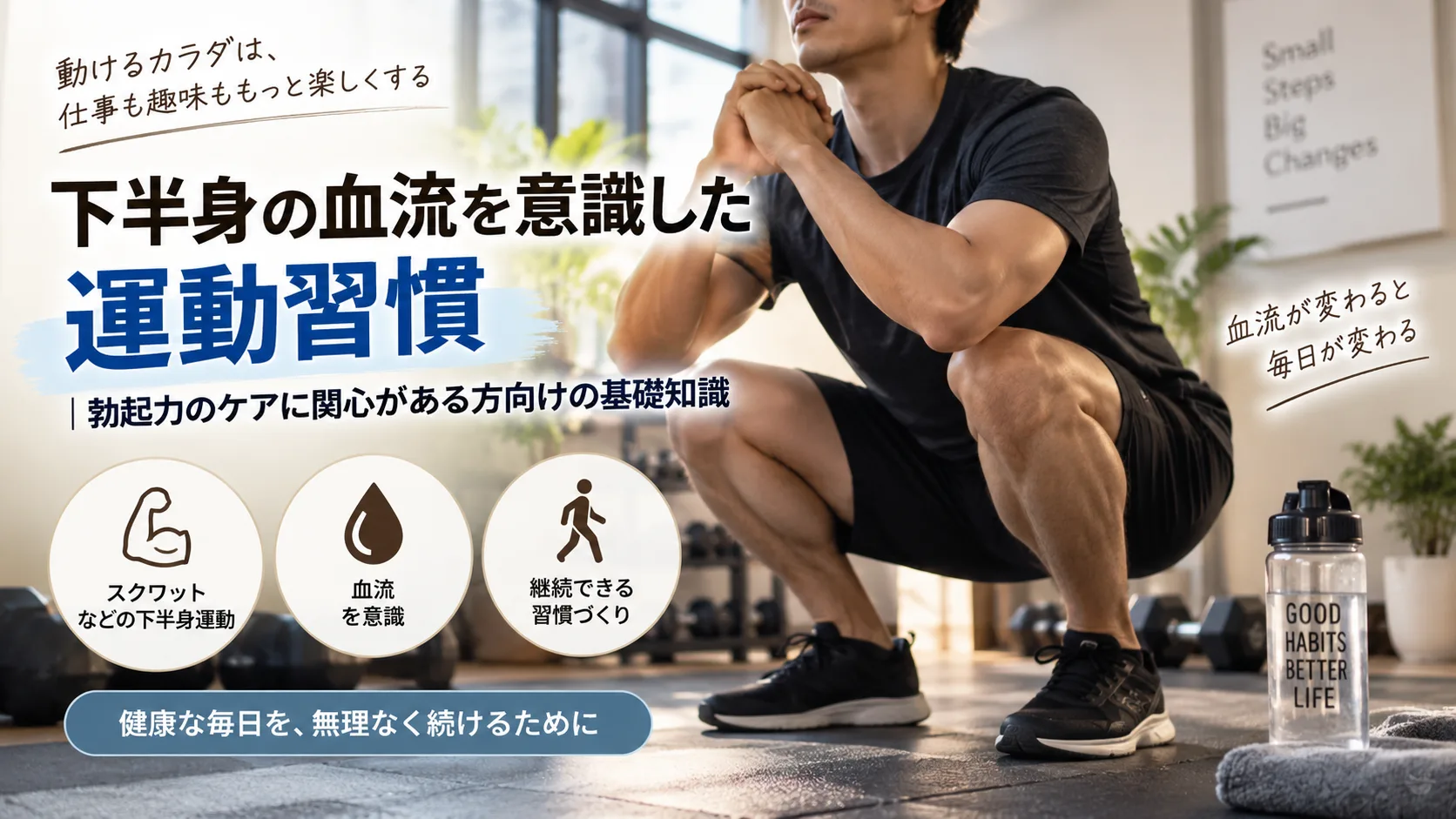
Squats
Works the large muscles of the lower body — the thighs and glutes.
- Stand with feet slightly wider than shoulder-width, toes turned slightly outward
- Lower your hips back, keeping your knees from going past your toes
- Lower until your thighs are roughly parallel to the floor, then return to standing
A commonly cited example is 10–15 reps per set, worked in a few times a week at a comfortable pace.
Pelvic floor training
Consciously tightening and releasing the muscles at the base of the pelvis.
- Lie on your back with your knees bent
- Tighten the pelvic floor muscles for about 5 seconds, as if stopping the flow of urine midstream
- Slowly release and relax for about 5 seconds
This can also be done sitting or standing; a commonly cited example is a few sets per day.
Aerobic exercise (like walking)
Walking briskly enough to raise your breathing slightly, for about 20–30 minutes a day, is commonly recommended for vascular health. Small habits like taking the stairs instead of the elevator are also commonly mentioned.
Lifestyle habits worth reviewing alongside exercise
To avoid undercutting the effect of exercise, these habits are commonly mentioned too:
- Getting enough sleep
- Eating a balanced diet that includes zinc- and amino-acid-rich foods (oysters, lean meat, nuts, etc.). If it's hard to get enough through diet alone, a zinc supplement is another option
- Cutting back on smoking and reviewing alcohol intake (nicotine is said to constrict blood vessels)
When to see a doctor instead
- No change even after several months of exercise and lifestyle adjustments
- Changes in erectile function alongside other symptoms like chest pain or shortness of breath
- Persistent, significant anxiety or stress
- Currently taking medication (side effects can sometimes be a factor)
If any of these apply, it's worth seeing a urologist or similar specialist rather than relying only on exercise or lifestyle changes.
Frequently asked questions
Will exercise definitely improve things?
Results vary by person, and there's no guarantee. Treat this as one commonly discussed lifestyle habit among others, not a guaranteed fix.
Is taking a supplement enough on its own?
Supplements alone aren't generally considered a substitute for reviewing exercise, sleep, and diet as a whole. If you have an existing health condition, check with a doctor before starting any supplement too.
Is it unusual to worry about this at a young age?
No — this is said to affect people across age groups. There's nothing to be embarrassed about; if it's on your mind, reaching out to a professional rather than carrying it alone is worth considering.