Frequent Men's Esthe Visits and Trouble Getting Aroused With a Partner: What's Said About It
Some men who visit men's esthe salons often say they have more trouble getting aroused with an actual partner. A look at the factors commonly discussed, lifestyle habits worth reviewing, and signs it's time to see a doctor.
What was updated
Published an overview of commonly discussed factors, plus signs that warrant seeing a doctor.
What this article covers
Some men who visit men's esthe salons frequently say they've noticed more trouble getting aroused during an actual encounter with a partner. This article covers:
- Factors commonly discussed as possible explanations (this is one perspective, not a diagnosis)
- Lifestyle habits some people find worth revisiting
- Signs that mean it's time to see a doctor instead of self-treating
This article includes editorial opinion — it is not a medical diagnosis
What follows isn't an established medical diagnosis or treatment — it reflects things the editorial team has heard and ideas commonly discussed elsewhere, not verified clinical guidance. The cause varies by person, and an underlying physical condition or other factor can be involved. If a concern like this persists, please see a urologist or a men's health clinic rather than continuing to self-diagnose or self-treat.
Short answer: it's often described as temporary habituation, and said to resolve with some distance
When no clear physical condition is found, one common explanation is that the brain becomes accustomed to a particularly strong form of stimulation, making it harder to respond to everyday stimulation. Many people who take some time away from frequent visits and adjust their daily habits say things settle down over time.
That said, this is only one perspective and won't apply to everyone. If anxiety is significant or the issue persists, it's worth talking to a medical professional rather than trying to resolve it entirely on your own.
Factors commonly discussed
The idea of habituation to strong stimulation
Men's esthe treatments are said to involve close physical contact, the sensation of oil, and an atmosphere outside everyday life — all described as producing strong pleasurable sensations. One idea is that once the brain adjusts to this level of stimulation, everyday stimulation can feel comparatively muted.
Sustaining an aroused state for an extended period without release
Men's esthe isn't intended as a sexual service or to end in ejaculation, and treatments are said to often involve maintaining an aroused state for the duration of the session. Some suggest that this pattern — sustaining a particular state over an extended period — may carry over into how things feel with a partner afterward.
Getting used to a passive form of pleasure
Men's esthe is fundamentally a passive experience — the client relaxes without needing to do anything. Being with a partner requires an active role instead — moving, paying attention to the other person, staying present. Some men say adjusting between these two modes takes getting used to.
Performance anxiety and a self-reinforcing cycle
Once something doesn't go as expected once, worrying about it happening again the next time can itself make the body respond less easily — a cycle some describe as more about anxiety than the original cause.
Things some people find worth revisiting
These are commonly discussed ideas, not a guaranteed fix.
Taking some time away from frequent visits
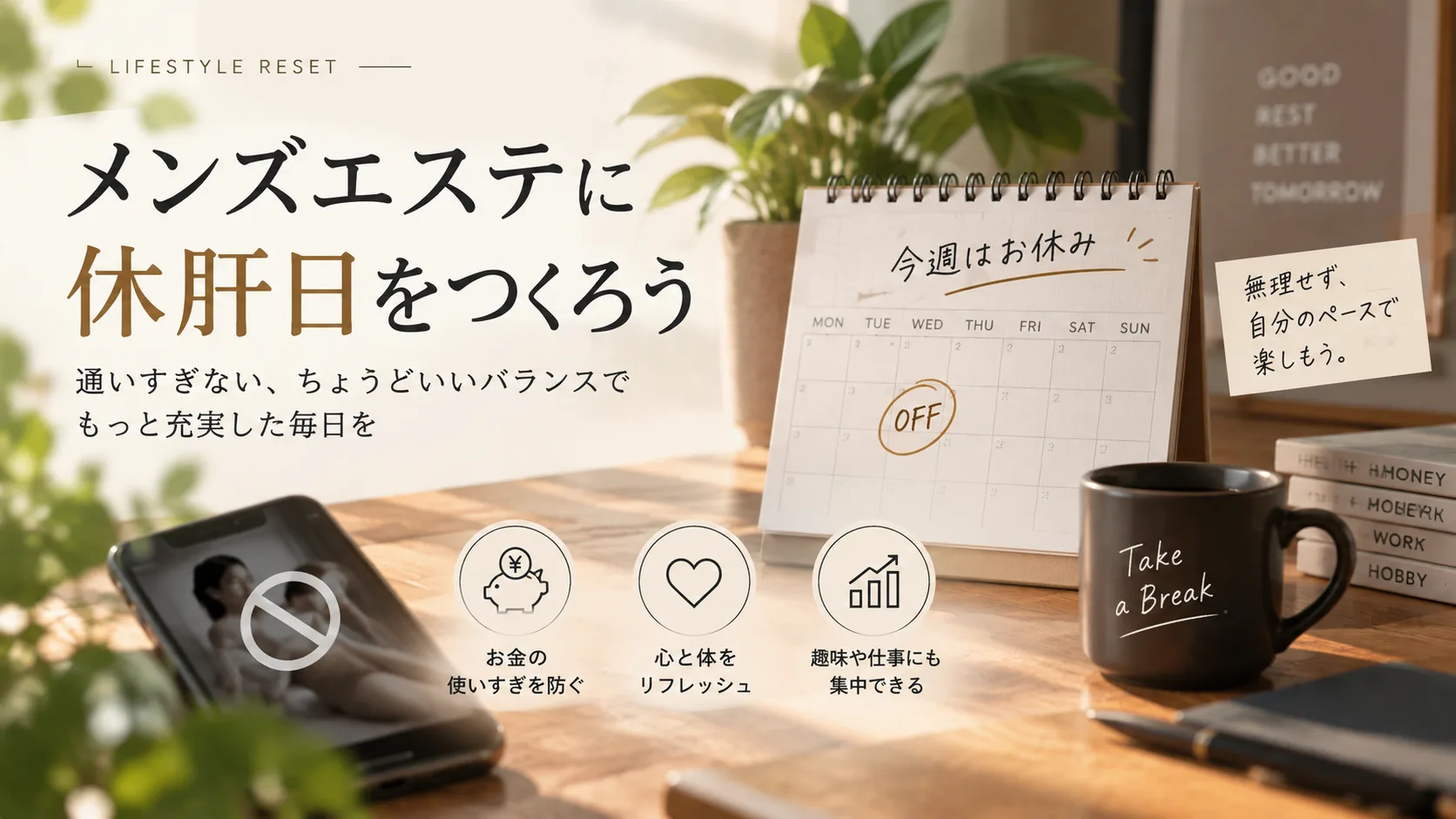
Reducing how often you go, or taking a deliberate break, is one option some people mention. How long is "enough" varies by person — there's no fixed number.
Basic lifestyle habits
Regular aerobic exercise and adequate sleep are generally considered good for circulation and the balance of the autonomic nervous system. This isn't about anything unusual — just revisiting everyday basics.
Talking to a professional instead of figuring it out alone
Rather than trying several self-directed approaches, reaching out to a medical professional early on can save time compared with trial and error.
When to see a doctor instead
- The issue hasn't changed even after several months of reduced frequency
- Persistent, significant anxiety or stress
- Other physical symptoms (pain, numbness, etc.) are also present
If any of these apply, something other than visit frequency may be involved. Urology and men's health clinics see this kind of concern regularly — it's worth reaching out to a professional rather than carrying it alone.
Frequently asked questions
Is this article saying men's esthe itself is bad?
No. This article isn't a judgment on men's esthe as a whole — it's about how frequency and individual differences can play a role for some people.
How long does it take to go back to normal?
It varies a lot by person, and there's no universal timeline. Some people notice a difference within a few weeks; others say it takes longer. If you're concerned, seeing a doctor is the more reliable path rather than waiting it out alone.
I don't feel comfortable talking to anyone about this
Urology and men's health clinics deal with concerns like this regularly. Reaching out to a professional, rather than carrying it alone, is worth considering.