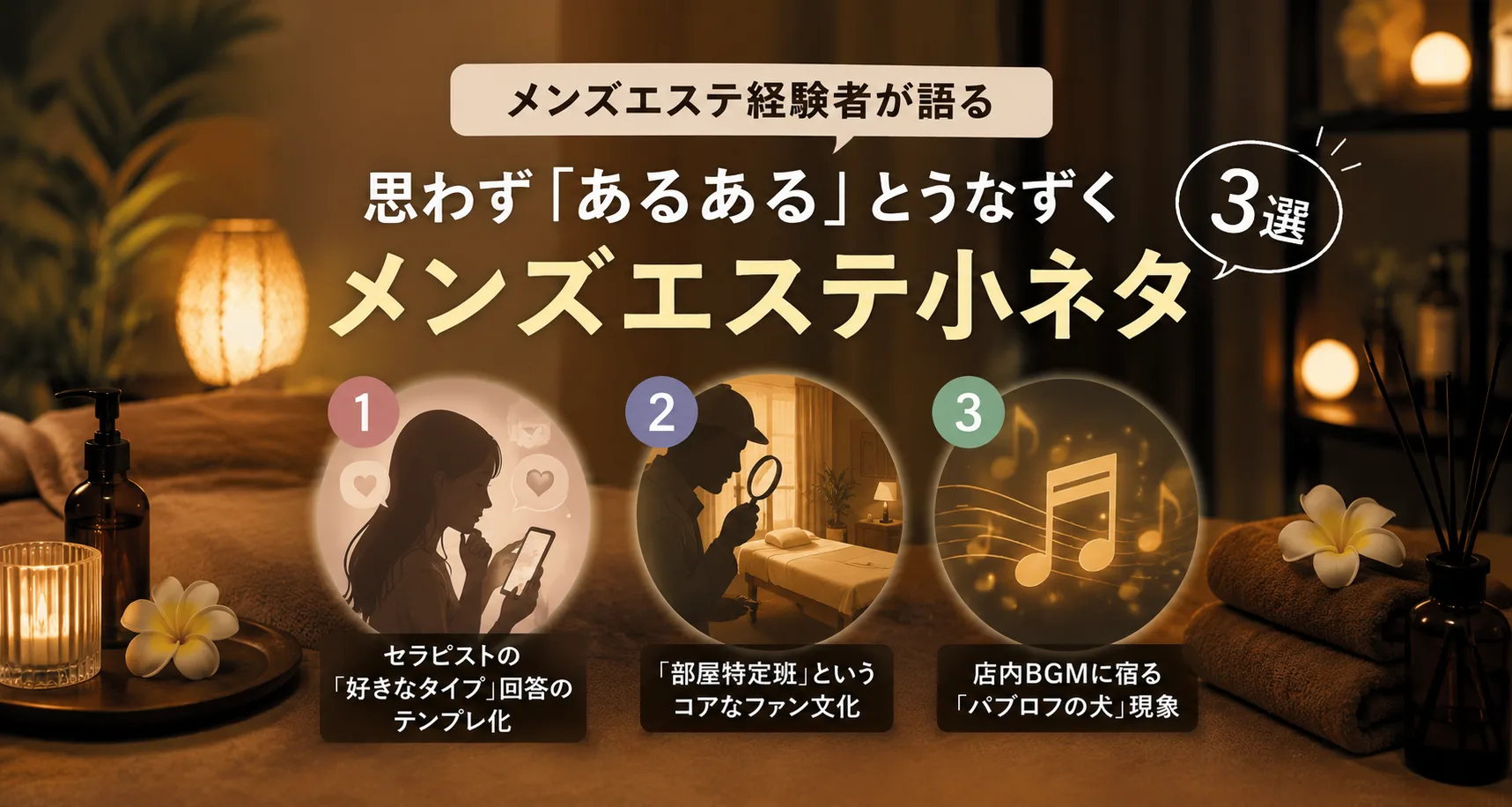
3 Small Things Regulars Notice About Men's Esthe
Three small, relatable observations that regular men's esthe visitors tend to recognize — about therapist profiles, room-spotting fan culture, and how in-salon music can stick in your memory.
What was updated
Added a few lighthearted editorial guesses to each topic.
What this article covers
If you've visited men's esthe salons a few times, certain small moments start to feel familiar. This article covers three of them:
- A pattern in how therapists answer the "type you like" question on their profile
- A niche fan culture around identifying a salon's exact room from photos
- How in-salon background music can end up sticking in your memory
This article includes editorial opinion
This isn't based on an industry-wide survey — it reflects things our editorial team has heard and observed, plus stories visitors commonly mention. It won't apply to every salon or therapist.
1. The "type you like" answer tends to follow a template
Therapist profile pages often include a "type of man I like" field, and the answers tend to cluster around a few patterns:
- "Someone kind with good hygiene" (broad enough to apply to almost anyone)
- "Someone who enjoys their food" (a safe, likable answer)
- "A bit intimidating-looking but cute when they smile" (aimed at a specific type of reader)
These answers are often said to be fairly standardized wording that staff prepare for customer-facing profiles. It's worth treating them as a light reference rather than a real signal of compatibility.
(Our own, entirely unscientific guess: if there were an honest version of this ranking, "someone with money" would probably be quietly sitting at number one.)
2. A niche fan culture around identifying the exact room
When a new salon opens, or in social media posts, therapists sometimes share a photo of just the treatment room. Within a small, dedicated segment of fans, there's said to be a culture of trying to identify the exact salon — and even the specific room number — from small details like wallpaper patterns, outlet placement, or a sliver of the view outside the window.
As impressive as that kind of observation can be, it's effectively an attempt to pinpoint where a therapist works. Because therapists' jobs already involve a degree of physical privacy, concerns about their workplace or general whereabouts being identified are a real and serious issue.
If you happen to notice identifying details, please don't share them or try to pin down the location. A safer working environment for therapists ultimately supports better service for everyone.
(Honestly, given how fast some of these identifications happen, our editorial team half-suspects it's actually building management staff doing the guessing, not fans. We can't confirm that either way.)
3. In-salon music can turn into a Pavlovian trigger
Treatment rooms sometimes play slow, music-box-style arrangements of Disney or J-pop songs. Visitors who go regularly often say that, later, hearing the same song at a café or on the street can suddenly bring back the smell of massage oil and the dim lighting of the treatment room.
It's a mild, harmless form of conditioning — similar to Pavlov's dog — but some people find it a little disorienting when the memory resurfaces unexpectedly.
(This led to a slightly awkward conversation on our editorial team about what a partner might think if they heard this exact style of music-box arrangement playing as "focus music" at home.)
Frequently asked questions
Does this apply to every salon?
No. This reflects patterns our editorial team has observed and heard about, not something true of every salon or therapist.
Is identifying a salon's room from photos illegal?
Whether it's illegal depends on the specifics, but it's a matter of therapist privacy and safety regardless. Avoid sharing identifying details or acting on them.
Should I ignore the "type I like" field on a profile?
Treat it as a light reference at most. A therapist's actual manner and conversation during your session are a more reliable way to judge compatibility.
Related English guides
- 8 awkward questions about men's esthe in Japan
- Therapist age groups and how to choose a salon
- How to read salon reviews
- What do therapists really think about hairy male clients?
- What therapists really think? 5 things they don't say out loud
- Hair removal, aromatherapy, men's esthe or a spa: what's the difference?
Read next
Related guides
What Therapists Really Think? 5 Things They Don't Say Out Loud
Five lighthearted 'insider' observations men's esthe therapists reportedly share but rarely say out loud — about hands-off clients, nomination reasons, first-timer claims, and more.
Is There Real Massage Skill at Men's Esthe? An Intermediate Guide to Choosing by Technique
For readers who want to choose a men's esthe salon by treatment skill, not just looks or physical closeness. Covers basic techniques, salon-specific treatment names, and how to spot a skilled therapist.
Why Do Some Men's Esthe Salons in Japan Seem to Operate in a Grey Area?
An intermediate guide to the visibility of ambiguous men's esthe salons in Japan, including apartment operations, vague advertising, rankings, personal options and booking checks.