What Experienced Aromatherapists Do Before They Even Touch You
The technique behind an experienced aromatherapist's session: working with scent before touch, weight-based pressure, treating the feet and scalp together, and how scent preference is discussed in the field.
What was updated
Published the technical side of an experienced aromatherapist's session.
What this article covers
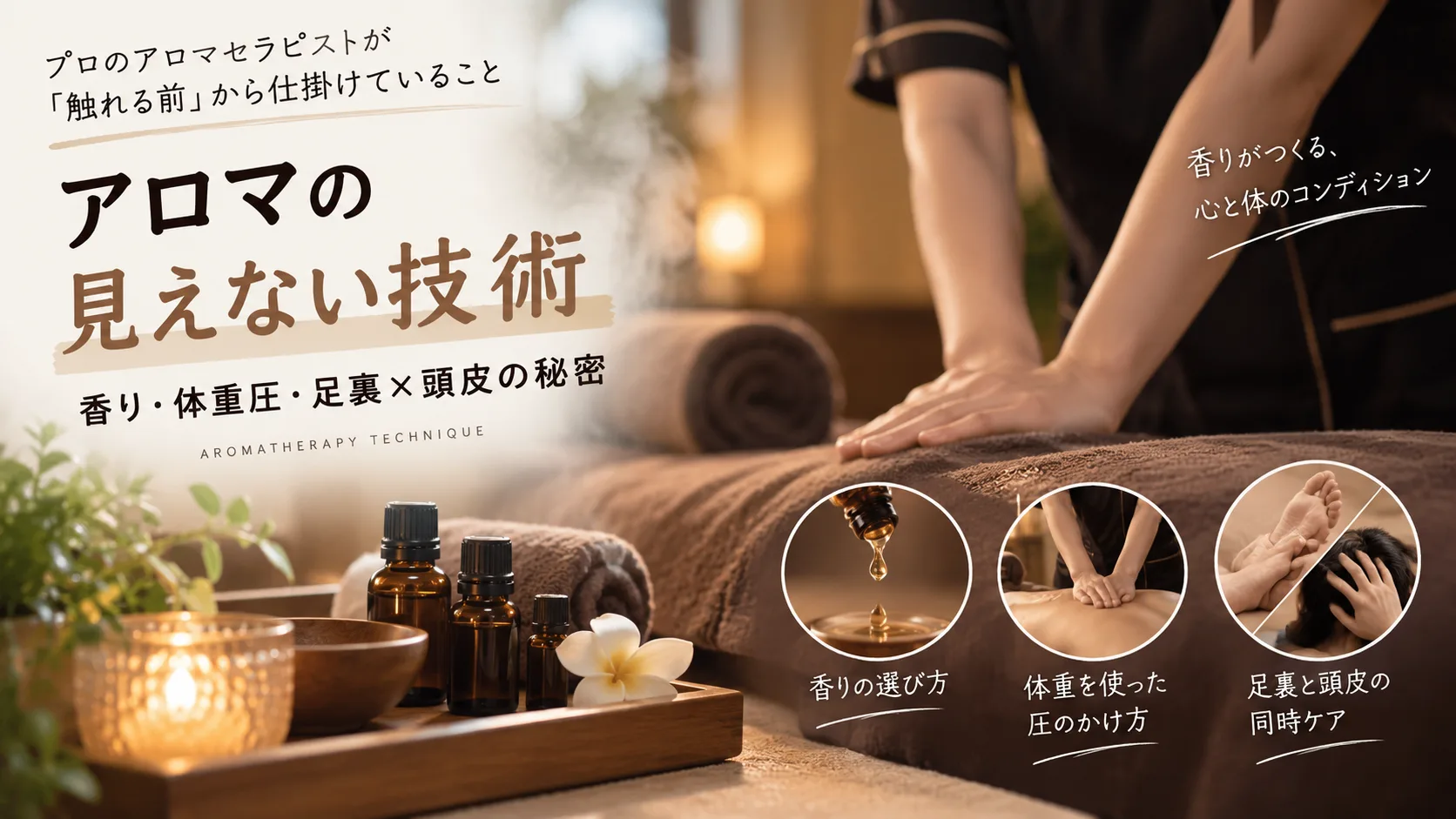
Aromatherapy tends to get summed up as "smells nice, feels nice," but experienced therapists reportedly start shaping a session before they even touch you. This article covers:
- Working with scent before the hands-on part begins
- Weight-based pressure that's said to feel deep without hurting
- Treating the feet and scalp together
- How scent preference is discussed as a loose indicator of condition
This article includes editorial opinion
What follows isn't established medical knowledge — it reflects things the editorial team has heard and ideas commonly discussed within the aromatherapy field. It won't apply to every therapist or salon, and none of it is a diagnosis or treatment for any condition.
Short answer: scent first, weight-based pressure, and working both ends of the body
Experienced aromatherapists are said to start a session by having the client breathe in an essential oil's scent, move into slow, weight-based pressure rather than arm strength for deep tension, and finish by working the feet and scalp together. None of these are flashy moves individually — together, they're said to add up to the "I actually slept" experience some clients describe.
1. Working with scent before the hands-on part begins
Smell is said to connect relatively directly to brain regions involved in emotion and the autonomic nervous system. Experienced therapists reportedly warm a small amount of essential oil in their palms before starting and hold it near the client's face, prompting a few slow breaths.
The idea discussed in aromatherapy circles is that this brief moment of attention to scent helps set up the rest of the session to be received more easily. That said, the exact mechanism connecting scent to the autonomic nervous system isn't something medical science has fully mapped out — treat this as a commonly discussed idea, not settled fact.
2. Weight-based pressure that's said to feel deep without hurting
Someone without training tends to press using arm strength, which can leave the surface feeling sore or trigger post-massage soreness.
Experienced therapists are said to use their own body weight, not arm strength, to apply pressure — leaning into a position rather than pushing. Working in a slow, wave-like rhythm timed to breathing (similar to the technique known as effleurage) is said to be behind the sensation some clients describe: deep tension being reached without the surface ever feeling like it's being pressed hard.
3. Treating the feet and scalp together
For clients whose tension doesn't seem to release even after a full-body session, some therapists reportedly work the feet (pressure points like yongquan) and scalp together, either midway through or toward the end.
Working both extremities — feet and head — at the same time is discussed in aromatherapy circles as something that tends to help the body settle into relaxation.
4. How scent preference gets discussed as a loose indicator
One idea discussed in the aromatherapy world is that which scent someone finds appealing on a given day can loosely track their condition that day. This is a folk-wisdom-style idea within the field, not a medical diagnosis, and should be read that way.
- Finding lavender-type scents appealing is sometimes discussed in connection with mental fatigue or poor sleep
- Finding citrus scents (like bergamot) appealing is sometimes discussed in connection with digestive fatigue or bottled-up emotion
- Finding woody scents (sandalwood, cedarwood) appealing is sometimes discussed in connection with wanting to feel calmer or more grounded
These associations are discussed as practitioner experience within the field, not a scientifically validated diagnostic method. If you have ongoing health concerns, please see a medical professional rather than relying on this kind of framework.
How this compares to men's esthe
As covered in our guide on the difference between hair removal, aromatherapy, men's esthe and beauty salons, if men's esthe leans on close contact and a sense of escape from routine, aromatherapy leans more on anatomical technique and working with the autonomic nervous system. Neither is inherently better — it comes down to what kind of experience you're looking for.
Frequently asked questions
Can the scent I pick really tell you about my condition?
This reflects practitioner experience discussed within the aromatherapy field, not an established medical diagnostic method. Treat it as a loose reference point, and see a doctor for any ongoing health concerns.
Doesn't weight-based pressure hurt?
It varies by person, but it's generally said to cause less surface discomfort than pressure applied with arm strength. If it still feels too strong, saying so in the moment is usually all it takes to have it adjusted.
Should I choose aromatherapy or men's esthe?
It depends on what you're looking for. If you want technique-focused care and fatigue recovery, aromatherapy is a natural fit; if you want a sense of escape from routine, men's esthe might suit you better. Comparing what each offers before choosing is worth doing.
Related English guides
- Hair removal, aromatherapy, men's esthe or a spa: what's the difference?
- Is there real massage skill at men's esthe? An intermediate guide to choosing by technique
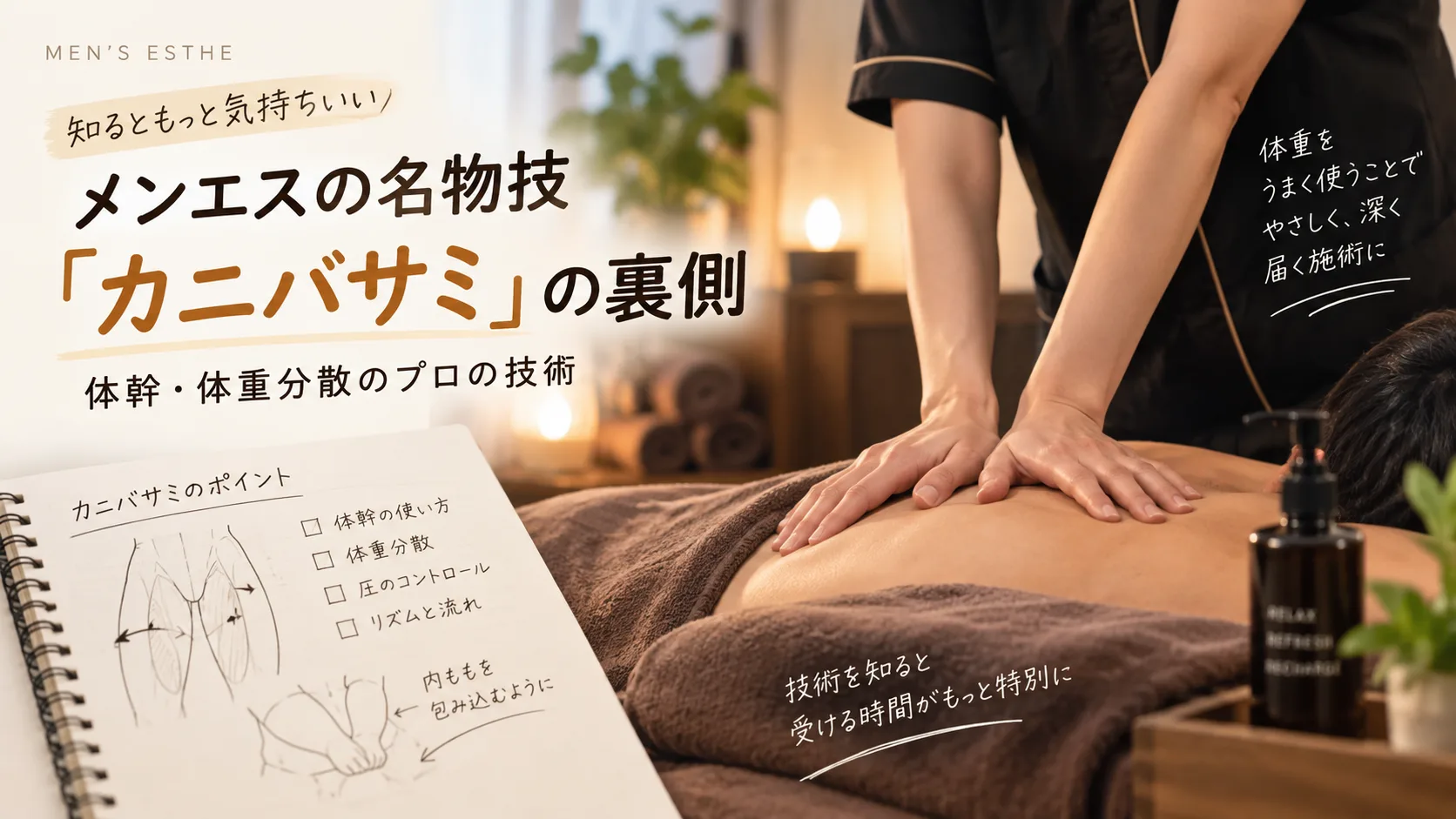
- The real technique behind men's esthe's famous "leg wrap" move
- Aromatherapy for better sleep: the 7 families of essential oils and how to use them safely